Zhengfu - "This is how life goes on!"
- Oct 4, 2024
- 6 min read
Updated: Oct 29, 2025
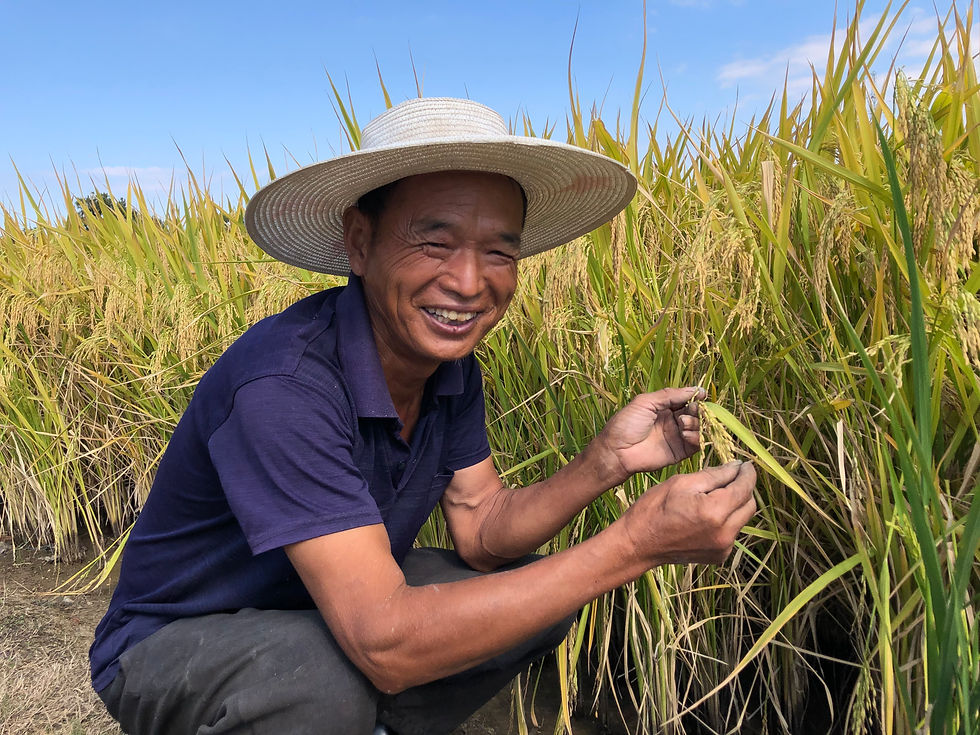
zhengfu, very proud of his paddy field
正富今年70岁,是一个做什么事情都觉得无所谓的、不攀比不焦虑不特别的喜悦也不特别的愁苦的农村老大爷,每顿饭剩下的菜他都不允许倒掉放到第二天自己吃,这么多年来倒也没有因为经常吃剩饭剩菜而生病,正富基本不生病甚至很健康,正富除了特别节省之外真的没毛病,吃得饱睡得香、日出而作日落而息,在这个时代简直就是很多人可望而不可求的天生的抗压心理素质一流的超强悍的那一类钢铁人。
正富是五十年代中国一个赤贫家庭里的三兄弟当中的老幺。他是身体最弱的所以也是母亲最疼爱的孩子,在六十年代中国闹史无前例的大饥荒时候,正富因为本来身体就弱几天没有饭吃就连野菜也没有了,很多人在那一年饿死了,三岁的正富饿的晕了过去,家里人也饿的奄奄一息,家里人以为正富已经饿死了就把他慢慢拖到稻草那里放在哪里回去了,碰巧一位邻居过来看见正富醒来过来还有一丝气息连忙把三岁的正富拎回家然后几户人家凑了一把米熬了米汤,把正富救活了。用正富的话说“那个年代,大米就是仙丹妙药!”,就这样正富艰难的渡过了那个特殊的年代。
到了上学的年纪,母亲就把他送到了学校,每天在食堂只吃一个粗面馒头就着家里带的咸菜,别的大孩子喝剩的菜汤就给正富喝,这样在学校的中餐就这样解决了,正富不聪明甚至很愚笨每一个年级几乎都留了级,磕磕巴巴勉强初中毕业了。家里实在没有钱再让他上学了,母亲决定让正富跟木匠师傅学手艺,母亲说“荒年饿不死手艺人!”有了手艺就有了吃饭的本领将来才能娶到老婆。正富并不是心灵手巧的人,学了很久才勉强出师,出师后先给家人用树木做了一些粗鄙简陋的凳子,然后才慢慢的敢接村里人家做桌子板凳的活计。
正富三十几岁的时候结了婚(这在当时的农村属于快要打光棍的年龄了)老婆是一个彪悍的母老虎,挣回来的钱都得交给她,有时候没有烟抽了正富会跟他老婆要好几天才能给他买一包烟的钱,尽管如此正富仍然觉得老婆很不错很精明有钱存银行还能算清多少钱存多长时间能得多少利息,这一点正富简直很崇拜老婆。
农村里过年是一个很隆重的节日其中最隆重的仪式非敬土地公公莫属了。每年的大年三十的凌晨三四点村民们都会把煮好的猪头、公鸡、鲤鱼等贡品抬到土地爷那里(他们村的土地爷爷是一棵百年老松树)把贡品摆好之后再烧香磕头为过去的丰收的一年感谢土地公同时为即将到来的新年祈福平安喜乐。一般大家都会选择在凌晨三四点去供奉,因为这个时间是证明你是最虔诚的如果去的太迟说明不够虔诚,所以无论大年三十的凌晨是什么天气大家都争相往土地爷那里去供奉。表达自己的虔诚祈求得到赐福。
但正富不管,他睡好觉已经七八点了然后慢悠悠的拎着猪头去了还说迟一点没有关系的,把他老婆急的都要骂他了。放鞭炮更是省钱,别人家买了好多鞭炮放的多就寓意着来年更红火,但正富只买了三个冲天炮一串小鞭炮,说放那么多干嘛!费钱!对联是自己买了几张红纸自己写的歪七扭八的贴在门上,门头上的风钱是把红纸叠起来用做木匠时用的凿子凿几个洞就成了简易的风钱,这一番操作用节省了不少钱,正富对此很得意。转眼正富也添了孙子,他更省了、除了农忙在家跟儿子一起种了几十亩地农闲时仍然外出打工,仍然吃着粗茶淡饭仍然吃得香睡得沉仍然不悲不喜不愁不焦,
“日子就这么过呗!”这是正富的口头禅。

zhengfu, introducing his backyard
Zhengfu is 70 years old this year and is a rural elder who feels indifferent about everything, not competitive, not anxious, and neither particularly joyful nor particularly sorrowful. He doesn’t allow leftover food to be thrown away; he eats it the next day. Over the years, he hasn’t fallen ill from frequently eating leftovers. Zhengfu hardly ever gets sick and is even quite healthy. Besides being extremely frugal, he really has no issues. He eats enough, sleeps well, works at sunrise, and rests at sunset. In this era, he embodies the kind of innate resilience and toughness that many people can only aspire to.
Zhengfu is the youngest of three brothers from a destitute family in China during the 1950s. He was the weakest physically, making him his mother’s favorite child. During the unprecedented famine in China in the 1960s, Zhengfu, already weak, went without food for days and even ran out of wild vegetables. Many people starved to death that year. Three-year-old Zhengfu fainted from hunger, and his family was on the brink of starvation. They thought Zhengfu had died of hunger and dragged him to the straw to leave him there. Fortunately, a neighbor saw Zhengfu waking up with a faint breath and hurriedly took him home. Several families pooled some rice to make rice soup, saving Zhengfu. In Zhengfu's words, "In that era, rice was like a magical elixir!" In this way, Zhengfu survived that difficult era.
When he was of school age, his mother sent him to school. Every day in the school dining hall, he only ate a coarse bread roll with the pickles his family sent with him. He drank leftover soup from other children, thus solving his lunch problem at school. Zhengfu wasn’t smart, even quite foolish (I quoted Zhengfu's original words), and almost failed every grade. He barely graduated from junior high. The family truly could not afford to send him to school anymore, so his mother decided to have him learn a trade with a carpenter. His mother said, "In a year of famine, skilled workers won’t starve!" Having a skill means having a way to earn a living, which is necessary for marrying a wife. Zhengfu was not particularly crafty and took a long time to barely qualify. After qualifying, he first made some rough and simple stools for his family, and only then did he slowly dare to take on jobs making tables and benches for villagers.
Zhengfu got married in his thirties (which was considered an age for being close to being a bachelor in rural areas). His wife was a fierce "tigress," and all the money he earned had to be given to her. Sometimes when he ran out of cigarettes, it would take Zhengfu several days to get money from his wife to buy a pack. Despite this, Zhengfu still thought his wife was pretty good, very shrewd, able to save money in the bank and calculate interest accurately. In this regard, Zhengfu greatly admired his wife.
In the countryside, the New Year is a grand festival, with the most important ceremony being the worship of the Earth God. Every year on New Year's Eve, villagers bring offerings like boiled pig heads, roosters, and carp to the Earth God (their village's Earth God is an ancient pine tree). After placing the offerings, they burn incense and bow to thank the Earth God for the past year’s harvest and pray for peace and joy in the coming New Year. Generally, everyone chooses to worship around three or four in the morning because this time shows your sincerity; going too late indicates a lack of devotion. So regardless of the weather on New Year's Eve, everyone rushes to worship the Earth God, expressing their devotion and seeking blessings.
But Zhengfu doesn’t care; he sleeps well and wakes up at seven or eight, then leisurely carries the pig head over, saying that being a bit late is fine, which makes his wife anxious enough to want to scold him. He is frugal with firecrackers; while others buy many firecrackers for the New Year, implying a prosperous year ahead, Zhengfu only bought three sky rockets and a string of small firecrackers, saying, "Why buy so many? It’s a waste of money!" He bought a few sheets of red paper to write his own couplets, which he stuck on the door crookedly. The wind money(风钱) above the door was made by folding red paper and using a chisel to make a few holes, saving quite a bit of money in the process, which made Zhengfu quite proud.
In the blink of an eye, Zhengfu also became a grandfather. He became even more frugal; besides working the fields with his son during busy seasons, he still went out to work during the off-seasons. He continued to eat simple meals, slept soundly, and remained indifferent to joy and sorrow.
"This is how life goes on!" This is Zhengfu's catchphrase.

zhengfu, showing us the beans


Comments