The Barber: Master Wu Part I
- Oct 29, 2025
- 2 min read
A narrow, old street with cracks and stains.
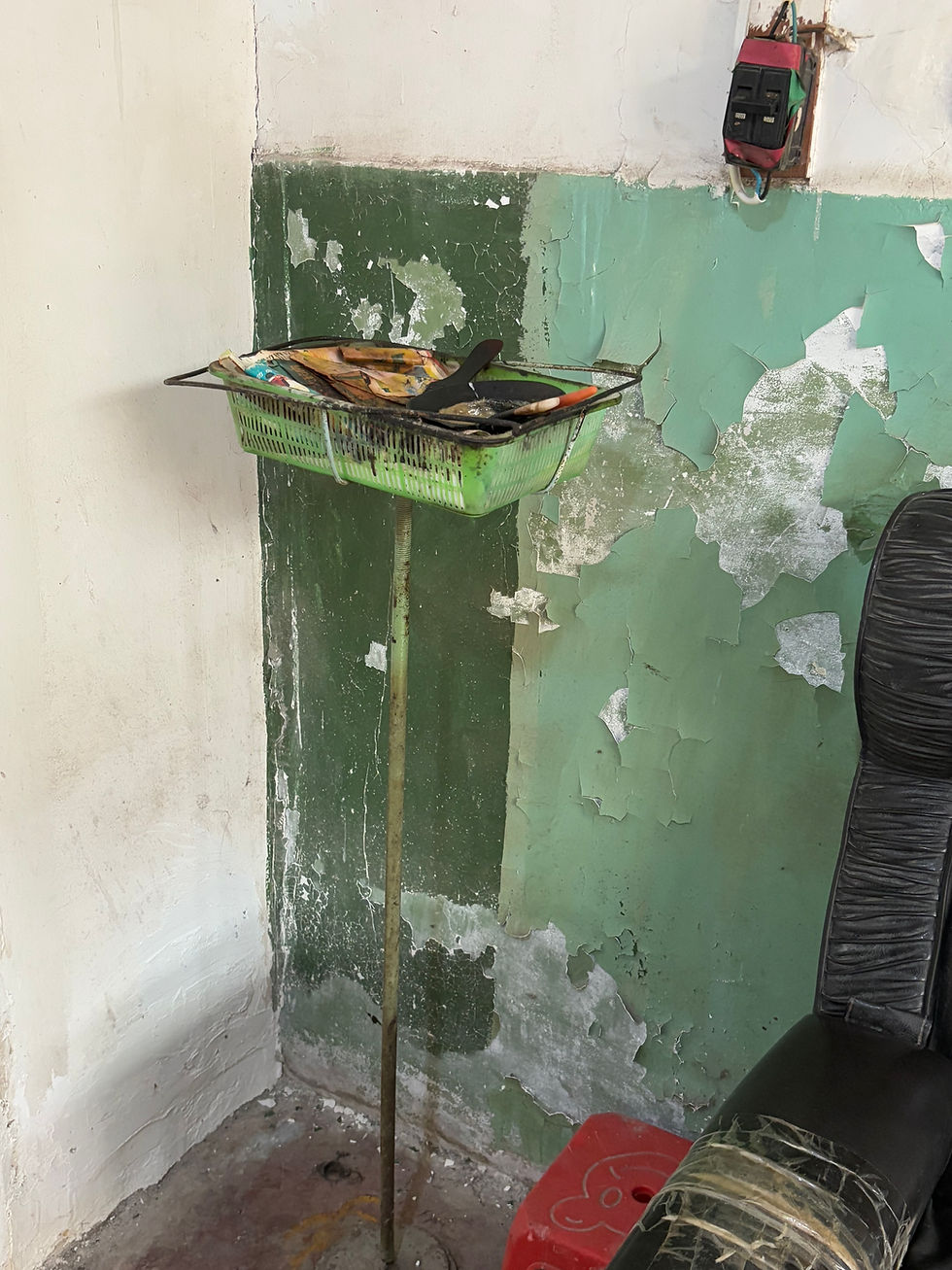
An old, shabby barbershop.
The shop’s doors look just like the ones from China’s 1970s supply stores — plain and simple, giving off a sense of openness, calm, and modesty.
On the wall there’s a big mirror. In front of it, two old-style barber chairs that can adjust for sitting or reclining. These two “Butterfly” chairs, made by the Shanghai Xinsheng Ironworks, have been around for over 60 years. (The reason it was called “Xinsheng” — “New Life” — is because this factory used to be a prison workshop in Hohhot. The name carried the meaning of repentance and starting over.)

A long, oil-stained leather strop for sharpening razors hangs across the footrest. The red floor paint on the concrete has almost worn off completely, showing the bare cement.
A thin man, about sixty, is giving an old man a haircut. The barber’s hands move skillfully, switching between scissors and clippers smoothly, one continuous motion without pause.
After finishing the haircut, he starts washing the man’s hair. Yes, you read that right — haircut first, then wash. That’s the traditional order, not like today where people always wash first.
After washing, he dries the hair with an old towel, then rubs the razor a few times back and forth on the stained strop, and starts shaving. After shaving, he cleans the customer’s ears — using a long, thin-handled ear pick to remove earwax, then a small soft round brush to gently spin inside the ear to finish cleaning.

Then he picks up the blow dryer, and with just a few swipes, the short hair is basically dry. He uses an oval soft brush to gently sweep around the neck to remove the loose hair, unfastens the cape, and that’s the end of the haircut.
The customer pays, says thank you, and leaves.


Comments