The Barber: Master Wu Part II
- Mar 3
- 3 min read
Following the previous chapter…
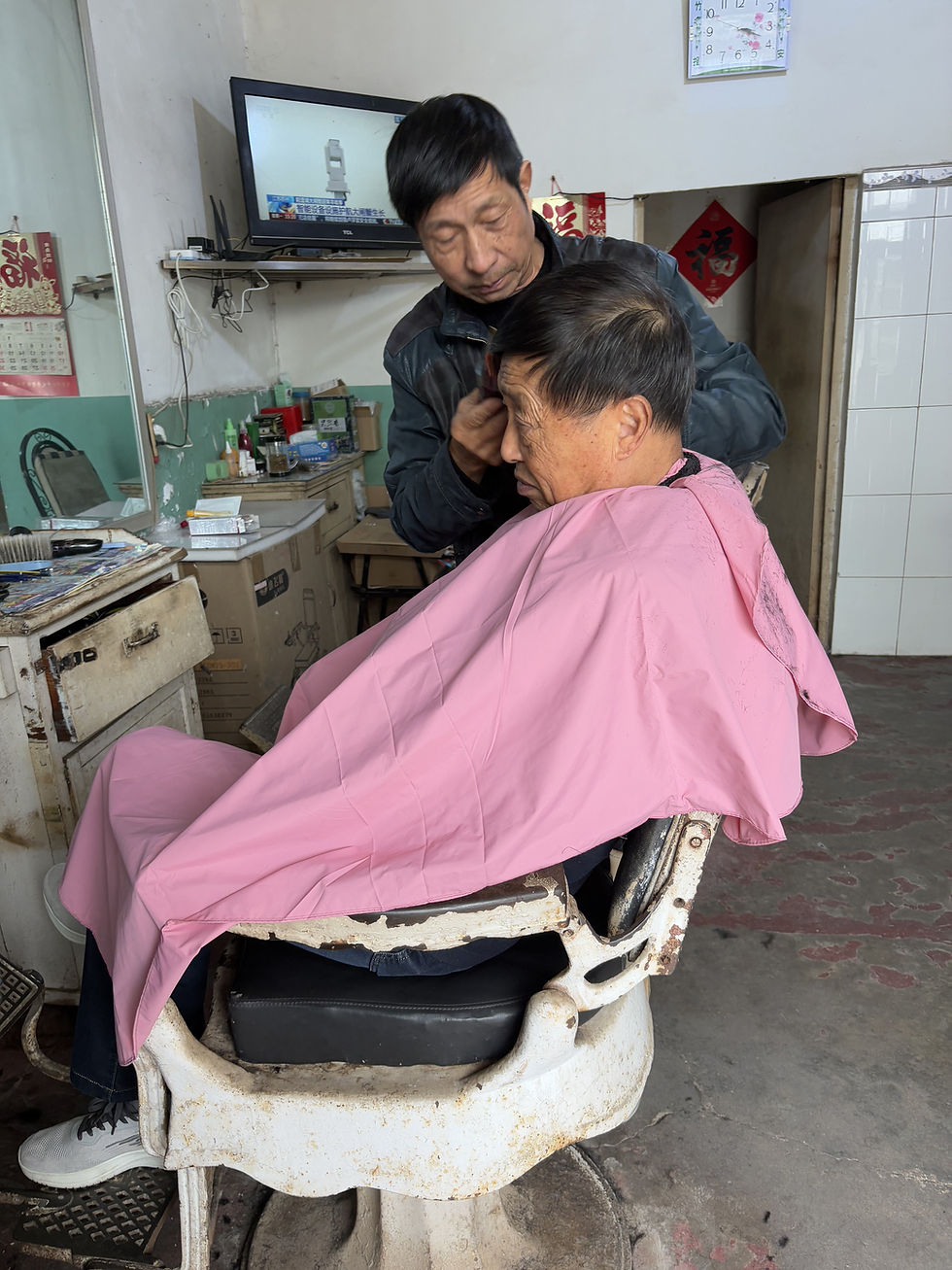
The barber’s surname is Wu. He is sixty-six.
Master Wu likes to say he was born at “just the right time” -- late enough to dodge the era when educated youths were sent down to rural villages. His four older sisters weren’t so lucky; all of them were shipped off to the countryside to work in the fields. At age fifteen, thanks to family connections as solid as steel, Wu squeezed into the county’s only state-owned barbershop as an apprentice. (Back then, a barbershop was like a supply-and-marketing cooperative -- state-run, serious, and definitely not a place for stylish perms and hipster fades.) Getting this job required parents with real social ties. And Wu’s parents clearly had them.
Being an apprentice was... let’s put it gently: misery with scissors.
In the beginning, he only washed customers’ hair. If the water wasn’t heated quickly enough -- he got scolded. Washed too long -- scolded. Too short -- still scolded. Basically, unless Master Wu held his breath perfectly, he risked being scolded.
Then came the terrifying stage of learning to cut hair.
One wrong snip and he got yelled at. When shaving customers, if he nicked someone’s face even slightly, not only did the customer glare, the master’s thunder came down instantly. The three years of apprenticeship felt longer than a dynasty. But somehow, he survived.
After mastering the craft, Wu became an official barber in the state-owned shop. He still remembers his monthly state-issued salary: 32.5 yuan. At that time, this was a handsome income -- a real iron rice bowl. People envied him, and Wu himself felt quite satisfied with life.
Back then, because many former “sent-down youths” returned to the city seeking jobs, night schools were everywhere. It was a chance to improve one’s education. Since Wu had dropped out at fourteen, he enrolled as well -- going to class every evening after work. He was quiet and refined by nature. No smoking, no drinking, no bad habits -- just a gentle, steady person.
Eventually, with the tide of economic reforms, the state-owned barbershop was restructured and dissolved. Wu was reassigned to work at the city’s chemical fertilizer factory. But that factory survived only by relying on government bailouts and ultimately closed too. And so, for the second time in his life, Wu picked up his scissors and bought back the old state-owned barbershop -- returning once again to the craft he knew best.
Master Wu has a very successful son working in Beijing. His wife once ran a tai chi class; Master Wu learned tai chi alongside her. Later, she went to Beijing to help take care of their grandchild, leaving Wu at home with his nearly 100-year-old father. Every morning, Wu buys fresh vegetables, goes to cut hair for his customers, then rushes home at noon to cook. In the evening, he returns early so he can eat and rest with his elderly father.

“My life is wonderful and peaceful,” he says.
He goes to bed at nine, wakes up at six. The moment he opens his eyes, he feels content with himself. He doesn’t keep a dog or cat -- only walks or jogs. His son used to raise a golden retriever, but after his daughter-in-law became pregnant, the dog was given away.
I asked Master Wu, “Wasn’t it hard to let the dog go?”
He replied calmly:
“Once you raise a dog or cat, you get attached. Then every time you travel or leave home, you worry about it. It’s not worth it. Humans shouldn’t be enslaved by pets. No matter how cute they are, I simply won’t raise one.”
With his pension and the income from cutting hair, Master Wu says his money is more than enough. He feels no lack.
Master Wu’s story -- The End.


Comments